

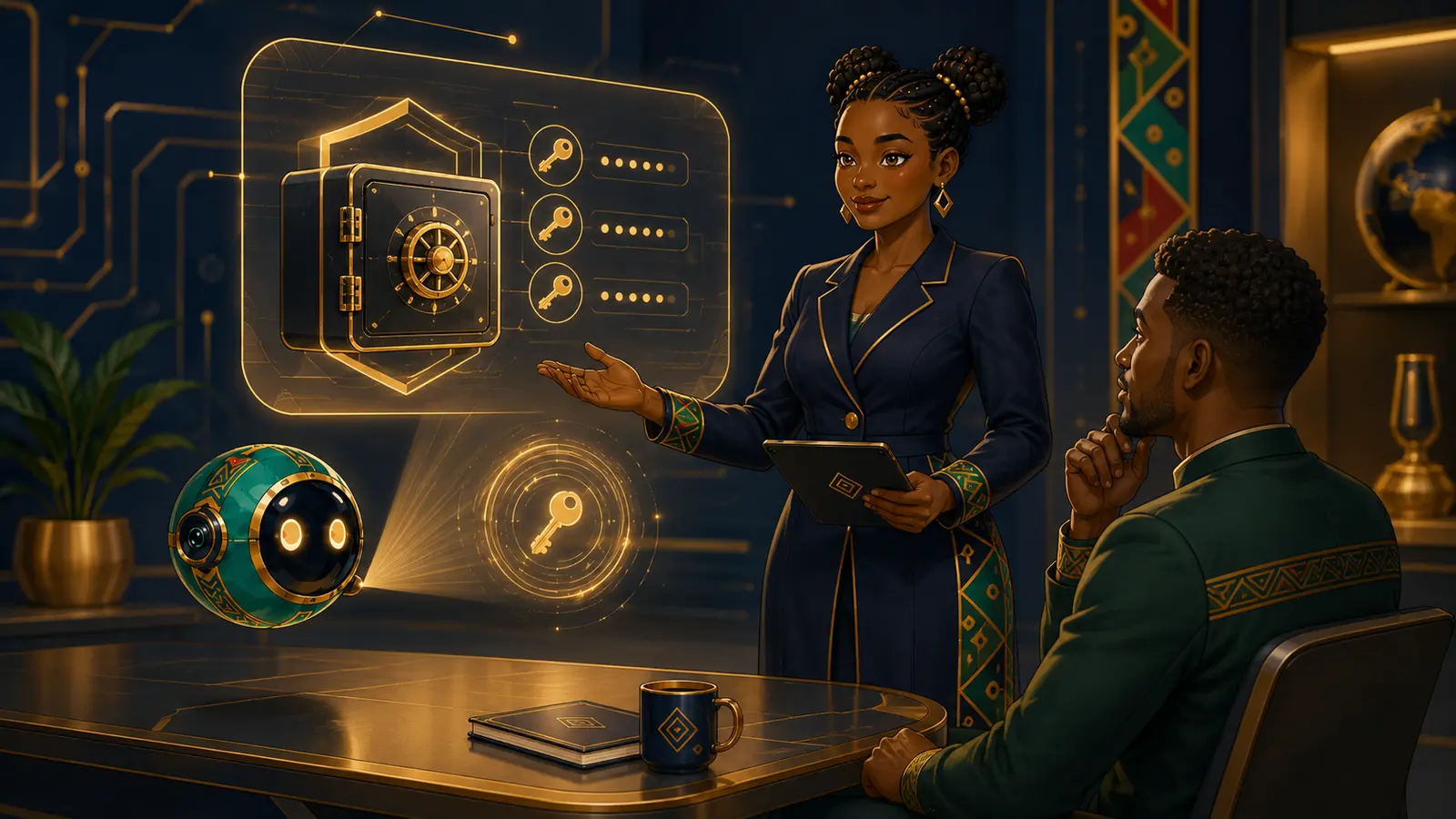
Long, unique and stored beats short, memorable and reused.
Do now: Change one reused password today, starting with email.
Protect the password manager with a strong master password and multi-factor authentication.Credential reuse turns one breach into many. A manager lets you use stronger, different passwords without asking your memory to become a filing cabinet.
Why uniqueness matters
Attackers test leaked email-and-password pairs on other services. If the same password opens several accounts, one old breach can unlock current work.
A strong password is long and unpredictable. Do not build it from public names, birthdays or a pattern that changes only one digit.
The most important property is not cleverness; it is uniqueness.
Let a manager remember
Use a reputable password manager built into your device or provided by a trusted independent service. It can generate random passwords, fill the correct site and warn about reused credentials.
Memorise one strong master passphrase and protect recovery information. Learn how to export or recover the vault before an emergency.
Recover after a warning
If you receive a breach alert, visit the service through a saved bookmark or typed address—not an unexpected message link. Change the affected password and every account where it was reused.
Review active sessions, recovery details and recent activity. Turn on two-factor authentication in the next lesson.
Changing one leaked password is incomplete if its twins still exist elsewhere.