

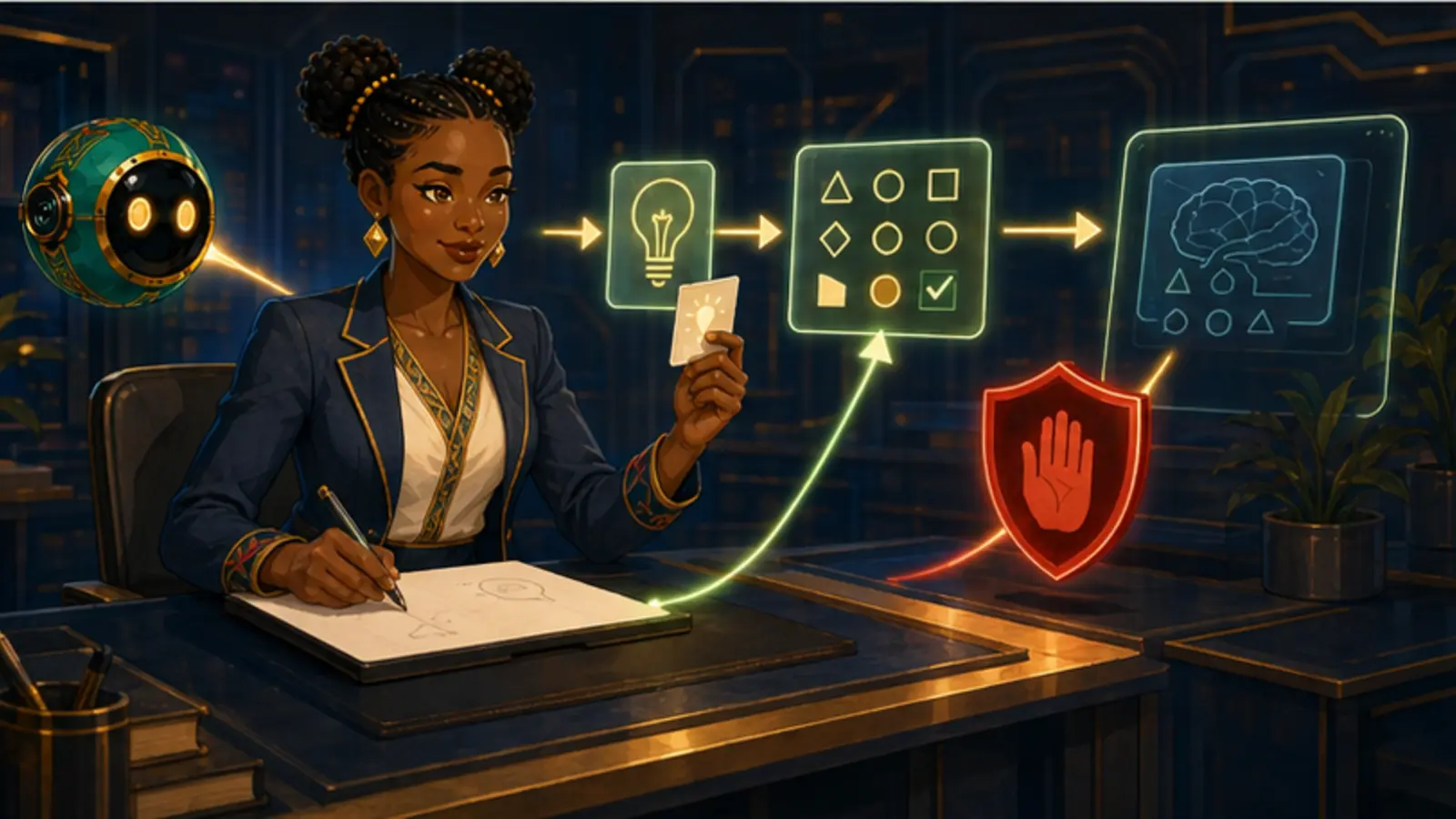
Learn the actual rule for the specific task, then use AI in ways that make you more capable rather than less.
Do now: Find your institution's policy and write down what it permits for your current assignment.
Keep drafts, notes and prompts. Process evidence is what answers a challenge.Assessment exists to measure what you can do. Outsourcing it produces a credential without the capability, and the gap surfaces later at a much worse moment. There is also a practical layer: rules differ by institution and task, and not knowing them is not a defence.
Find the actual rule
Policies vary by institution, by course and by task, and they are frequently more permissive than students assume for some purposes and stricter for others. Many permit AI for understanding, planning and feedback while prohibiting it for the assessed writing itself.
Where a rule is unclear, ask the person who marks the work, before submission and in writing. That question is not an admission of anything; it is the behaviour of someone who intends to comply. Asking afterwards is a different conversation entirely.
Some tasks require disclosure of assistance. Where they do, disclose specifically — what you used it for and what you did yourself. A vague acknowledgement satisfies nobody and can look like concealment.
Ask before, in writing. The same question afterwards is a different conversation.
Uses that build capability
Explanation until you understand: asking for an idea five different ways, with worked examples, until one lands. Nothing is being outsourced; you still have to understand it.
Retrieval practice: asking to be questioned and corrected, which is the most effective use available and the one students use least.
Feedback on your own work: 'here is my argument, what is the weakest part, what would an examiner object to'. You wrote it; the critique improves your next draft rather than replacing this one.
Planning and structure for your own ideas, and checking your understanding by explaining a concept and asking where you went wrong. All of these leave the thinking with you, which is the test.
Keep the process evidence
Save drafts, notes, sources, outlines and any prompts you used. If your work is ever questioned, process evidence is what settles it — far more convincingly than a detection tool's score, which is unreliable in both directions and has wrongly flagged genuine work often enough to be a poor basis for anything.
Version history is particularly persuasive because it shows thinking developing over time, including the parts you abandoned. That pattern is difficult to fake and easy to produce if you simply work normally and do not delete things.
Be able to explain your own work aloud. If you can discuss your argument, defend your sources and say why you rejected an alternative, you have demonstrated the capability the assessment was measuring, whatever tools were involved.
Detection scores are unreliable in both directions. Your drafts are not.