

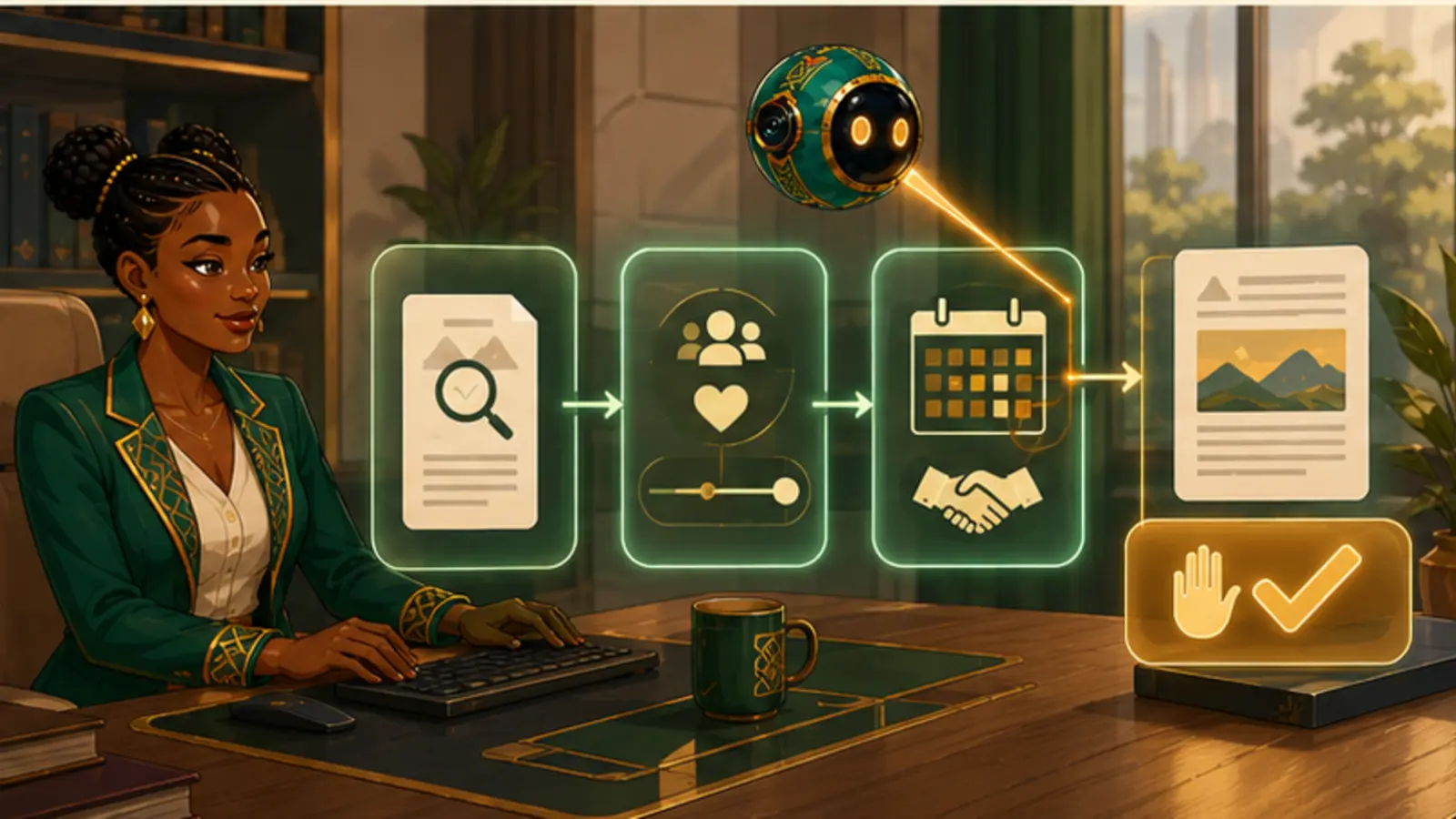
AI supplies the shape. You supply the facts, the voice and the commitments.
Do now: Draft one real message using placeholders for anything you have not confirmed.
Read every sentence that commits you to something, twice.Writing is where most people first save real time with AI, and where most people first embarrass themselves. The difference is a short habit: supply the facts, guard the voice, check the promises.
Brief it like you would brief a colleague
A useful brief names four things: who is reading, what you want to happen, what facts may be used, and what tone fits the relationship. Most disappointing output traces back to a brief that named none of them and simply said 'write an email about the delay'.
State constraints explicitly, especially the negative ones. What must not be promised. What is still uncertain. What the reader already knows and does not need repeating. A model will happily fill a gap with something plausible, and plausible commitments are the expensive kind.
Use placeholders for anything unconfirmed — [DATE TO CONFIRM], [AMOUNT PENDING] — and ask for them to be left visibly blank. That single instruction prevents the most common failure, which is a confident specific appearing where you had none.
If you did not supply a fact, it should not be in the draft. Ask for gaps to be marked, not filled.
Protecting your own voice
Default AI writing has a recognisable register: slightly formal, evenly balanced, fond of triples and transitional phrases. It is competent and it is nobody. Readers who know you will notice, and in a small business or a community organisation, being recognisable matters more than being polished.
The practical fix is to supply samples. Paste two or three things you have actually written and ask for the same sentence length, vocabulary and directness. This works far better than adjectives — 'friendly but professional' means almost nothing, while three real paragraphs of yours mean a great deal.
Then rewrite the opening and the closing yourself, always. Those are the parts people read most carefully and remember longest, and they are the cheapest place to put your own hand back on the work.
The commitment check
Before sending, read only the sentences that commit you: dates, amounts, deliverables, apologies, guarantees. Everything else is presentation. These sentences are the document's actual content, and they are where a fluent draft does its damage.
Check the tone against the relationship rather than against a standard. An apology that is too elaborate reads as insincere; one that is too brisk reads as dismissive. Only you know which this reader needs, and that judgement is not something to delegate.
For anything sensitive — a complaint, a dismissal, a refusal, bad news — draft with AI if it helps, then leave it and come back. The delay does more for the quality of a difficult message than any prompt will.
Presentation is the model's job. Commitments are yours, and they are what the reader will hold you to.