

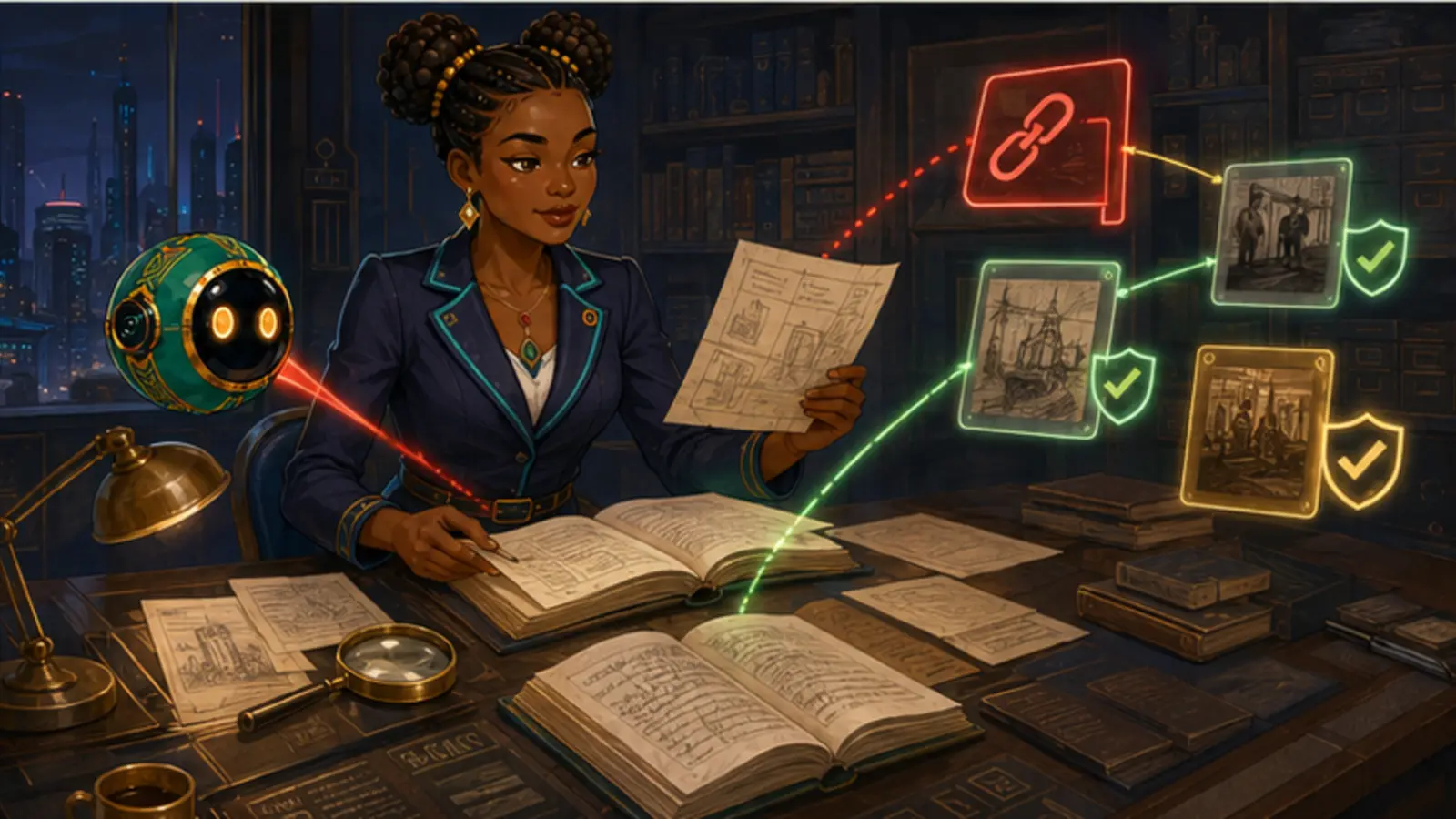
A text assistant that is not searching is writing from patterns, not from records. A research assistant that searches can still summarise a source it has misread.
Do now: Take one answer you were given recently and try to open every source it named.
A citation is a claim about the world. Treat it as one until you have opened it.Text assistants are the most-used AI tools and the easiest to misread. They are excellent at organising, drafting and explaining, and unreliable at remembering specifics. The difference decides whether your work holds up when somebody checks it.
Two different machines wearing the same interface
A text assistant generates language that fits the patterns it learned. Ask it for the structure of a business plan and it will do well, because that structure is genuinely a pattern. Ask it for last quarter's figure and it may produce a number shaped exactly like the right answer.
A research assistant searches first and then writes about what it found. This is a real improvement — the claims are anchored to documents that exist. It does not eliminate the problem. The tool still chooses which results to trust, still compresses them, and can still summarise a source in a way the source would not recognise.
So the question to ask of any answer is simply: did this come from a document, and can I open it? If the tool cannot show you, you have a draft, not evidence.
Fluency is a property of the writing. Accuracy is a property of the sources. They are produced by different processes.
What text assistants are genuinely excellent at
Structure. Turning a rambling voice note into headings and actions. Explaining a concept at three different levels until one lands. Rewriting something you already know to be true so a different audience can follow it. Generating twenty options so you can reject nineteen.
Criticism, too, which people underuse. Asking a model to argue against your draft, list what a sceptical reader would object to, or name what your plan assumes without saying so — these produce useful output precisely because they do not depend on recalling facts.
Notice the pattern: these tasks either supply the truth yourself, or produce something you will judge. Where you supply the facts and it supplies the shape, the tool is on firm ground.
Building a source trail you can defend
Separate discovery from evidence. Use the assistant to find leads, name the kinds of source you need, and list what would count as proof. Then open the sources yourself. A link you have not clicked is a suggestion; a document you have read and dated is evidence.
Record four things for each source that matters: what it says, where it is, when you accessed it, and how confident you are. That last column is the one people skip and the one that saves them, because it forces you to admit which parts of your answer are still soft.
For anything current — prices, laws, policies, who holds a position, what a platform allows — assume the model's built-in knowledge is stale and check. Being confidently out of date is the most common way these tools embarrass people.
Volume of citations is not quality of evidence. Three opened sources beat twelve listed ones.