
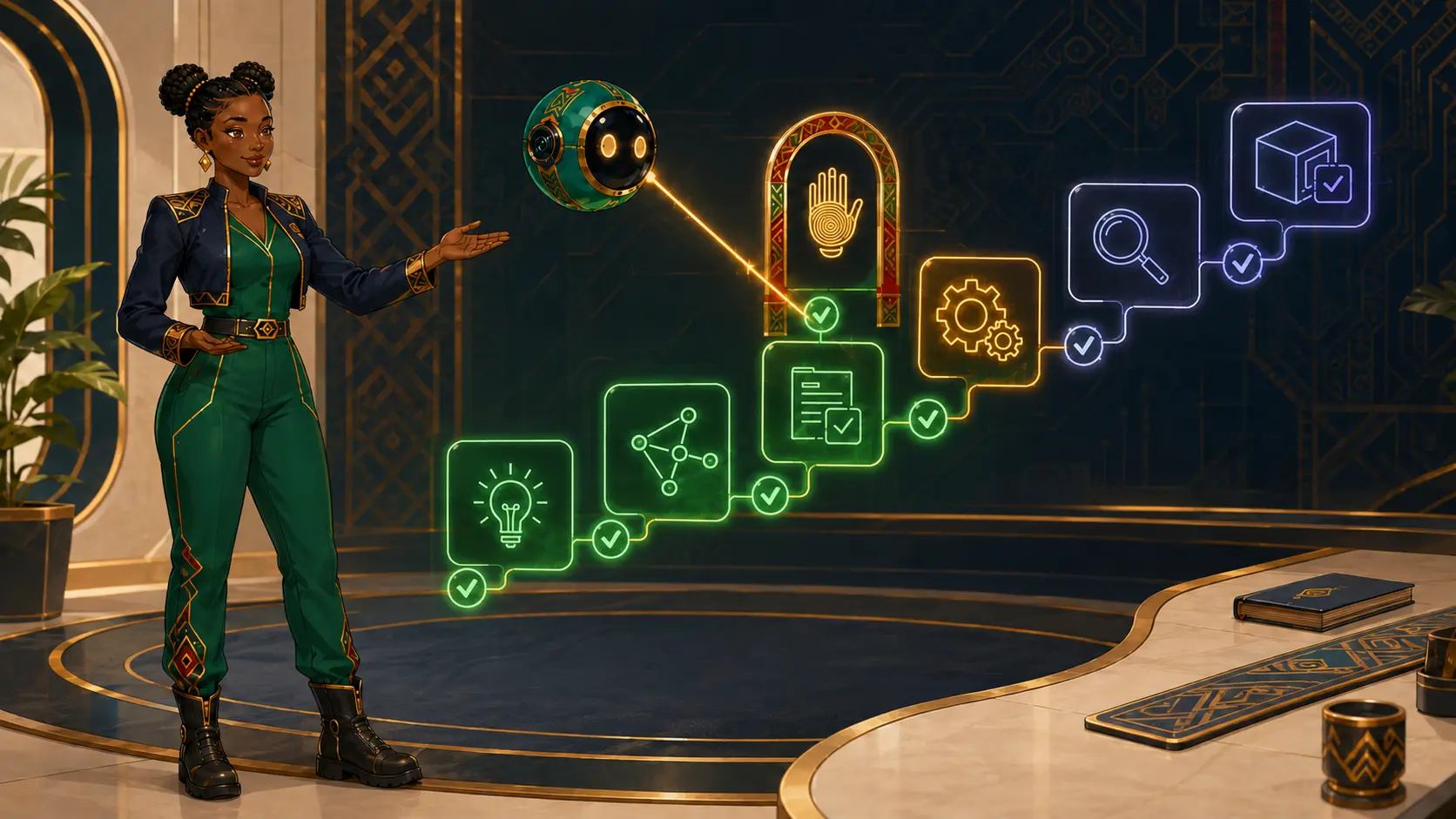
Break work where the input changes, a decision occurs or the cost of error rises.
Do now: Turn one large prompt into four stages and add a check after each.
Do not automate the next step until the current output is good enough to become its input.Stepwise work makes errors easier to detect, allows evidence to travel with the task and prevents a polished final output from hiding a weak beginning.
Find the natural stages
Most projects contain discovery, decision, production and review. Separate them so a person can inspect evidence before generation compounds an error.
Give each stage one owner, input and output. If a stage cannot be described clearly, it is probably still too large.
A workflow is a chain of promises between steps.
Place gates where mistakes grow
Add approval before money is spent, private data is shared, content is published or a person is affected. Use automated checks for format and completeness, but keep accountable review for judgement.
Define a fallback for missing evidence, model failure or tool outage.
Carry traceability forward
Pass source links, assumptions and verification status into the next stage. Do not hand a naked summary to the next prompt and expect provenance to reappear.
Measure the whole process: correction time, error rate, user outcome and exceptions—not only generation speed.
Fast wrong work is still wrong, just punctual.