

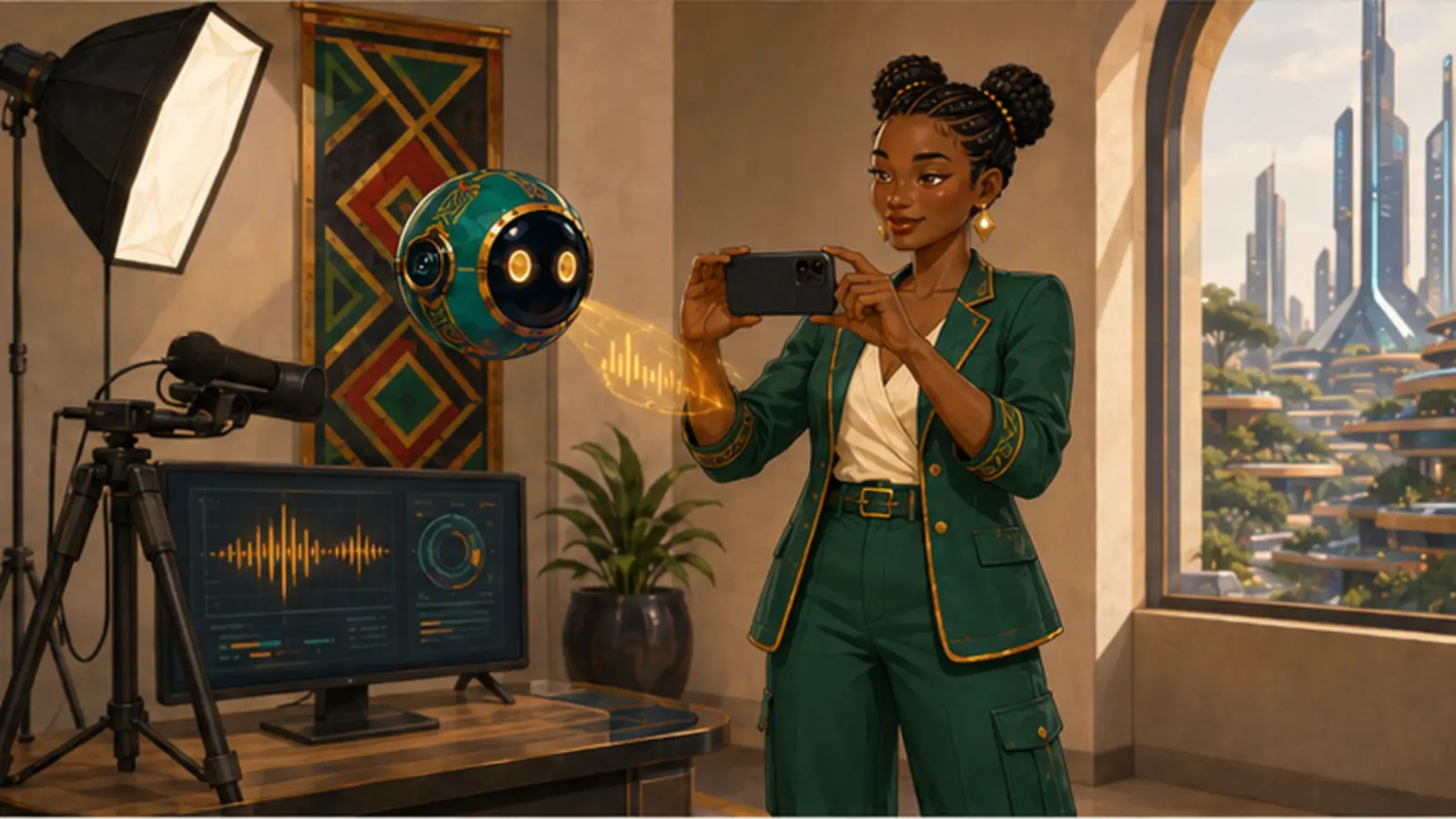
Build the judgement before the automation.
Viewers forgive imperfect pictures and abandon bad audio within seconds. If you improve one thing, improve sound: record somewhere soft and enclosed, keep the microphone close, and turn off fans and fridges before you start.
Daylight is free and better than most lights people buy first. Face a window, put nothing bright behind you, and film at the same time of day so your footage matches when you cut it together.
Framing is a decision, not an accident. Eye level, a little space above the head, and the camera far enough away that your face is not distorted. Lock the exposure and focus so the picture stops hunting mid-sentence.
Record a short test and watch it on a phone with the volume low, because that is how most people will see it. Problems that are invisible on a laptop at full volume are obvious under real conditions.
AI can clean audio, remove background noise, stabilise footage and improve low light after the fact. Every one of those tools works far better on decent source material — repair is a rescue, not a substitute for recording carefully.