
Build the judgement before the automation.
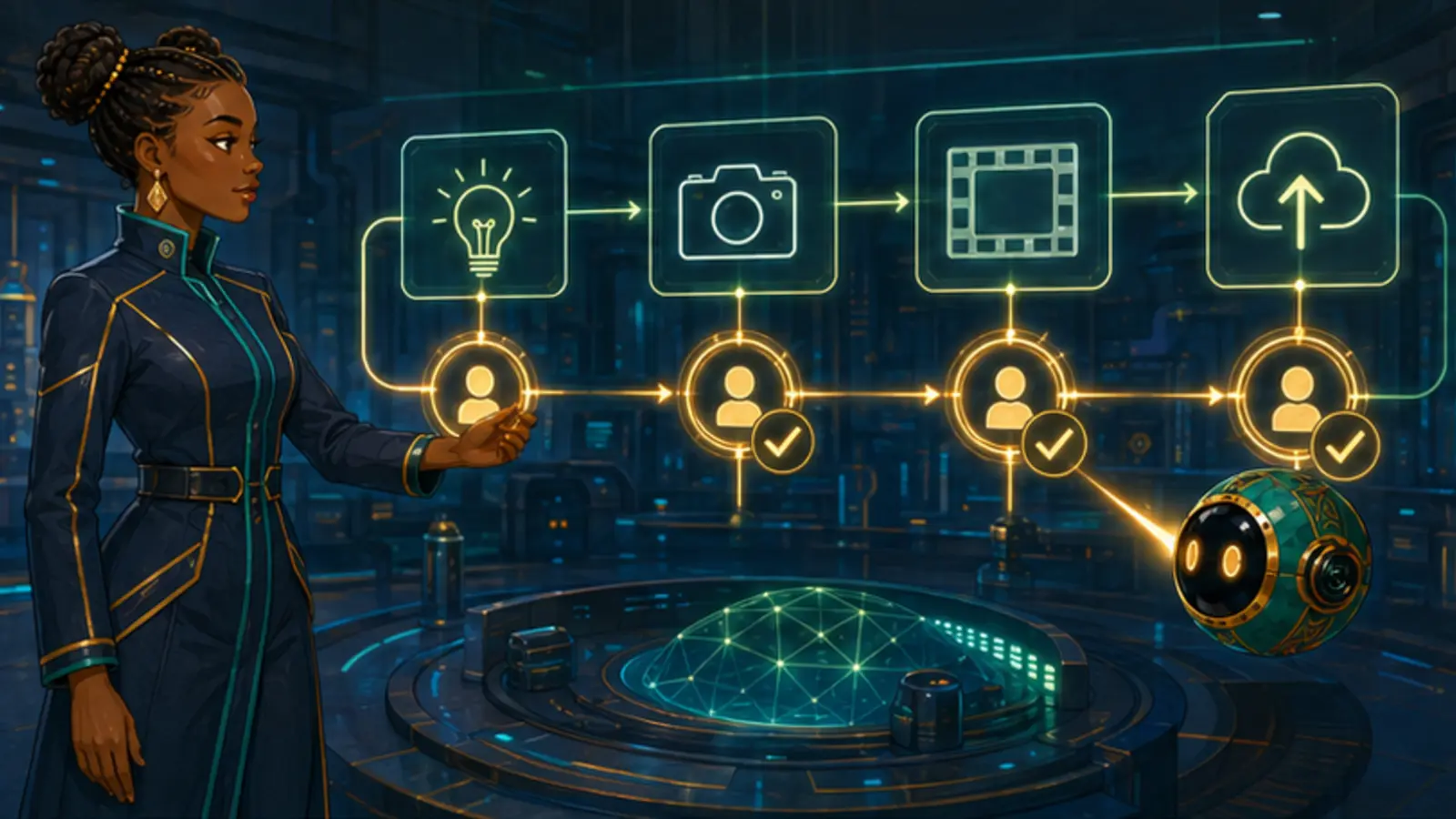
Responsible production is a set of gates, not a disclaimer at the end. The decisions that cause harm — using someone's likeness, stating an unverified fact, implying an event happened — are all made during production, when they are still cheap to reverse.
Three separate systems govern AI content on YouTube and creators routinely confuse them. Altered-content disclosure covers realistic synthetic material that could mislead. Copyright and Content ID cover material you do not own. Monetisation originality covers whether the channel adds meaningful value. Passing one tells you nothing about the other two.
Disclosure is required where realistic content has been meaningfully altered or synthetically generated. It is not required for obviously unreal material, minor edits, or production assistance like colour correction and script help. When you are uncertain, disclose — the cost is a small label, and the cost of not disclosing is your channel.
Disclosure is also not permission. Labelling something does not make it acceptable to imitate a real person, put words in their mouth, or fabricate an event. The label tells viewers what they are seeing; it does not transfer the right to make it.
Consent is specific. Someone agreeing to appear in an interview has not agreed to have their voice cloned, their likeness placed in a different scene, or their words tightened into something they did not say. Ask for what you actually intend to do, in writing, and keep it.
The practical test is whether you could explain, to the person most affected, exactly what was generated, what was verified, and who decided to publish. If that conversation would be uncomfortable, the problem is upstream of disclosure.